AI medical malpractice is becoming a serious legal topic in 2026. Hospitals, clinics, imaging centers, and medical device companies now use more artificial intelligence in patient care. These tools can help doctors read scans, organize records, flag risks, and make faster decisions.
That sounds helpful, and sometimes it is. AI can support better care when trained, tested, and used correctly. But when a software tool misses a warning sign, gives a wrong result, or guides a provider in the wrong direction, a patient may suffer real harm.
The legal issue is not simple. A patient may not know that AI played a role in the diagnosis, procedure, monitoring, or treatment plan. The doctor may rely on the output. The hospital may store the data. The device maker may control the software. If something goes wrong, the key question becomes direct: who is responsible?
This topic fits Injury Law Encyclopedia because your site already covers technology-related injury claims, including ADAS crashes and robotaxi accidents. This article brings that same modern liability issue into healthcare. It explains how AI medical malpractice claims may work and what evidence patients should preserve.
Why AI Medical Malpractice Claims Are Trending in 2026

AI medical malpractice claims are trending because AI is no longer a future idea in healthcare. Medical providers may use AI tools in radiology, cardiology, surgery, pathology, monitoring, documentation, and triage. Some tools help identify possible disease. Others help guide procedures or alert staff to patient changes.
The risk grows when people treat AI output as certainty. A software result can look clean and professional. It may appear on a dashboard, scan report, or device screen. But a clean-looking result can still be wrong.
A patient injury may happen when a doctor relies too heavily on AI. It may also happen when a hospital fails to train staff. In other cases, the software may have a defect, weak warning, poor update history, or unclear instructions.
How AI can enter medical decisions
AI can affect care in several ways. It may review medical images and flag possible abnormalities. It may calculate patient risk. It may help monitor heart rhythms. It may assist surgical navigation. It may also create summaries, notes, or alerts inside hospital systems.
These tools can influence what a provider does next. A doctor may order more testing because an AI tool flagged a concern. A doctor may also skip extra testing because the tool did not flag anything. Both situations can matter in a malpractice investigation.
Problems can arise when AI misses cancer, misreads imaging, creates a false alert, labels anatomy incorrectly, or fails to warn staff about a dangerous change. The patient may face delayed treatment, wrong treatment, unnecessary surgery, or a worse outcome.
AI support does not replace human judgment
AI should support medical judgment. It should not replace it. A doctor still needs to examine the patient, listen to symptoms, review history, order proper tests, and explain risks.
This matters because patients may assume that a computer result is automatically more reliable. That assumption can be dangerous. AI systems depend on training data, software design, testing, updates, and real-world use. They can still produce mistakes.
If a provider follows an AI output without question, the case may focus on whether that reliance was reasonable. A careful provider may need to question the result, compare it with symptoms, or order more testing.
Why documentation and disclosure matter
Documentation can decide many AI medical malpractice cases. The medical record should show what tool was used, when it was used, what it reported, and who reviewed the result.
If a tool created an alert, the chart should show whether staff responded. If a provider ignored the alert, the chart should explain why. If a doctor relied on AI during diagnosis or surgery, the record should help explain that decision.
Poor documentation creates uncertainty. That uncertainty can lead to deeper legal review. Patients and attorneys may need hospital policies, device logs, audit trails, software versions, training records, and expert analysis.
How Patients Can Build an AI Medical Malpractice Claim
An AI medical malpractice claim still needs the same legal foundation as other malpractice cases. The injured person must show duty, breach, causation, and damages. In plain terms, the patient must show that someone failed to provide reasonable care and that the failure caused harm.
AI does not remove that burden. It changes the evidence. A traditional malpractice case may focus on charts, testimony, test results, and expert opinions. An AI-related case may also need software logs, device data, system warnings, update history, and user training records.
The claim may involve several parties. A doctor may have used the tool incorrectly. A hospital may have failed to train staff. A manufacturer may have released unsafe software. A clinic may have ignored alerts. A maintenance vendor may have failed to update the system.
Who may be responsible when AI contributes to harm
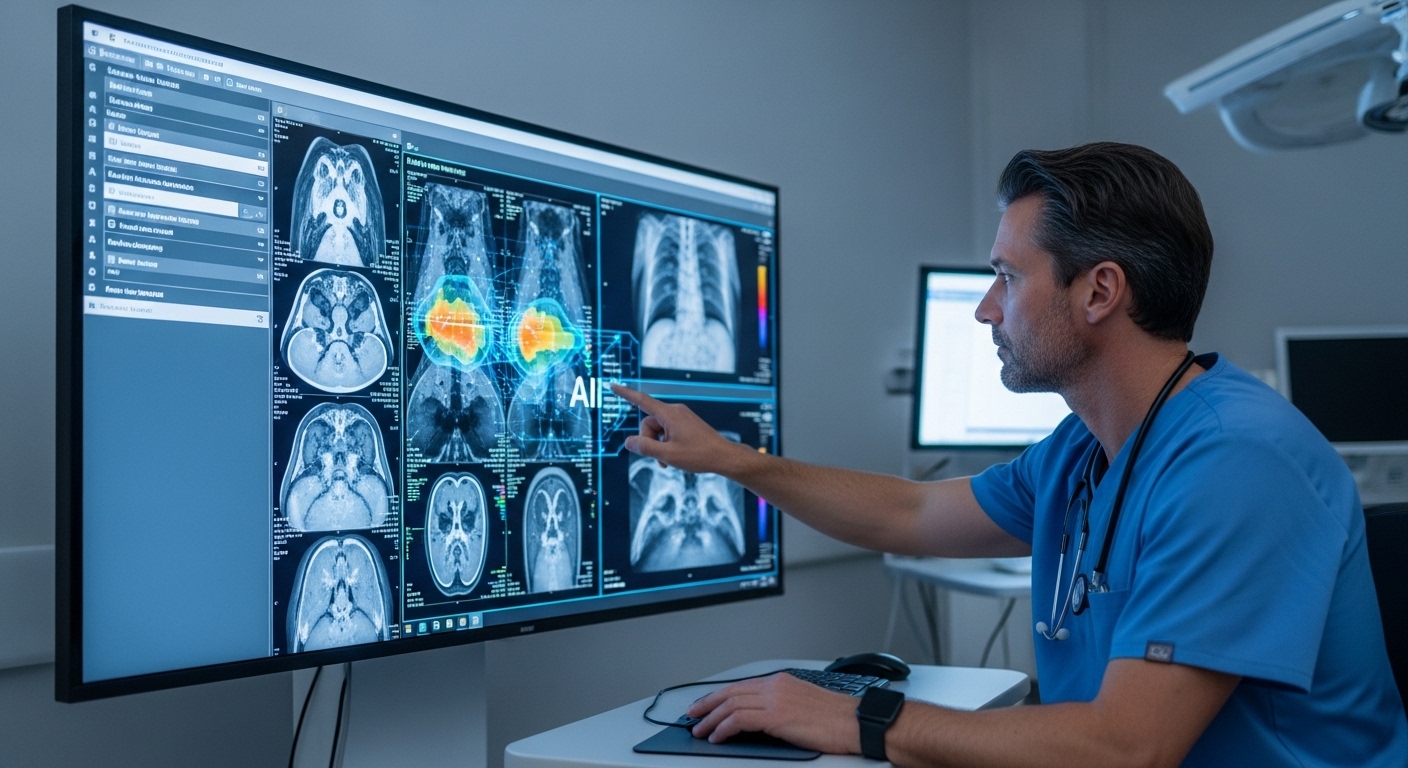
Several parties may come under review after an AI-related injury. A doctor, nurse, specialist, hospital, imaging center, lab, or clinic may face questions about medical judgment. A device maker may face questions about product design, warnings, testing, or software updates.
Some cases may remain classic medical malpractice claims. Others may include product liability issues. A defective device or poor warning can shift part of the focus toward the manufacturer.
The case may also involve shared responsibility. A doctor may blame the software. A device company may blame the doctor. A hospital may blame training or workflow. The injured patient needs evidence that shows how each party acted.
This issue connects well with Injury Law Encyclopedia’s article on ADAS accident claims in 2026. Both topics involve software, human judgment, warnings, and technical evidence. It also connects with robotaxi accident claims, where digital records can matter as much as scene evidence.
Evidence patients should preserve early
Patients should preserve records as soon as possible. Important evidence may include medical charts, imaging files, lab results, discharge papers, prescriptions, portal messages, billing records, and second-opinion reports.
AI cases may need more than a basic chart request. Patients may need device logs, software version history, alert records, audit trails, hospital policies, staff training materials, and records showing who reviewed the AI output.
A personal timeline also helps. Write down symptoms, appointments, tests, diagnosis dates, treatment changes, calls, portal messages, and worsening conditions. A clear timeline helps experts see where the care may have gone wrong.
What damages may be available after AI-related medical harm
Damages depend on the injury and state law. A patient may seek compensation for medical bills, future care, lost income, reduced earning ability, pain, emotional distress, disability, and reduced quality of life.
Severe cases may involve life-changing harm. A delayed diagnosis can reduce treatment options. A surgical error can cause permanent injury. A missed alert can allow a condition to worsen. The value of the claim depends on proof, not just the presence of AI.
Patients should also remember deadlines. Medical malpractice claims often have strict statutes of limitation. Some states also require expert review before filing. Waiting too long can weaken or destroy a claim.
For general injury claim background, readers can review Car Accidents: Legal Procedures and Compensation. The facts are different, but the basic claim structure still helps readers understand evidence, damages, and compensation. Readers can also review Slip and Fall Injuries: How to Make a Claim for another example of how documentation supports liability.
Final thoughts
AI medical malpractice will likely become more common as healthcare technology expands. These cases may involve familiar injuries, but the evidence can look very different. A missed diagnosis may involve imaging software. A surgical injury may involve navigation technology. A delayed response may involve ignored alerts.
The right question is not whether AI is good or bad. The right question is whether the patient received careful medical care. Doctors must still use judgment. Hospitals must train staff. Device companies must design safe products. Everyone involved must document decisions clearly.
For official background, readers can review the FDA Artificial Intelligence-Enabled Medical Devices page. The FDA explains how its list helps patients and providers identify authorized medical devices that use AI technologies.
This article is for general educational purposes only. It is not legal advice. Anyone who believes AI-supported medical care caused harm should speak with a qualified attorney about records, deadlines, expert review, and legal options.