
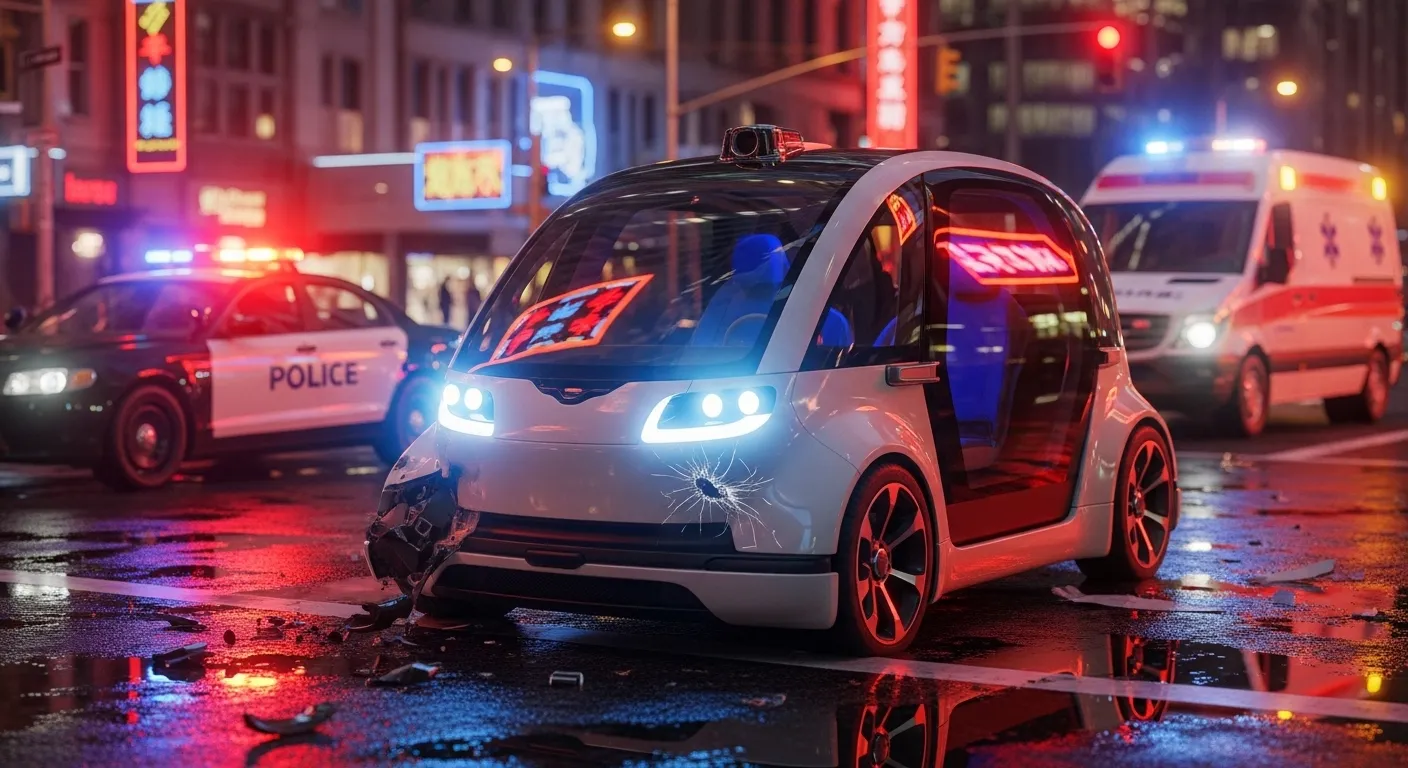
Robotaxi accident claims are becoming one of the most important emerging topics in personal injury law. Self-driving rideshare services are no longer just a future concept or a tech experiment. They are starting to carry real passengers in everyday traffic, which means real injury claims can follow when something goes wrong.
That shift matters because a robotaxi crash does not fit neatly into the usual pattern of blaming one human driver and moving on. In a standard car accident case, lawyers often focus on distraction, speed, right of way, impairment, and road conditions. In a robotaxi case, those facts still matter, but the analysis can stretch further into vehicle software, automated driving behavior, remote assistance, system logs, maintenance records, and app-based ride data.
This topic fits Injury Law Encyclopedia well because your site already covers ADAS accident claims in 2026, car accidents: legal procedures and compensation, how settlements work in personal injury cases, and statute of limitations in personal injury cases. A robotaxi article builds on those pages instead of overlapping them.
It also gives readers something they are starting to search for now: who may be responsible when a vehicle with no traditional driver causes harm. That question can affect passengers, pedestrians, cyclists, and people in other vehicles. As self-driving rideshare services expand, more injury victims will want practical answers about liability, evidence, deadlines, and compensation.
Why Robotaxi Injury Claims Are Rising in 2026
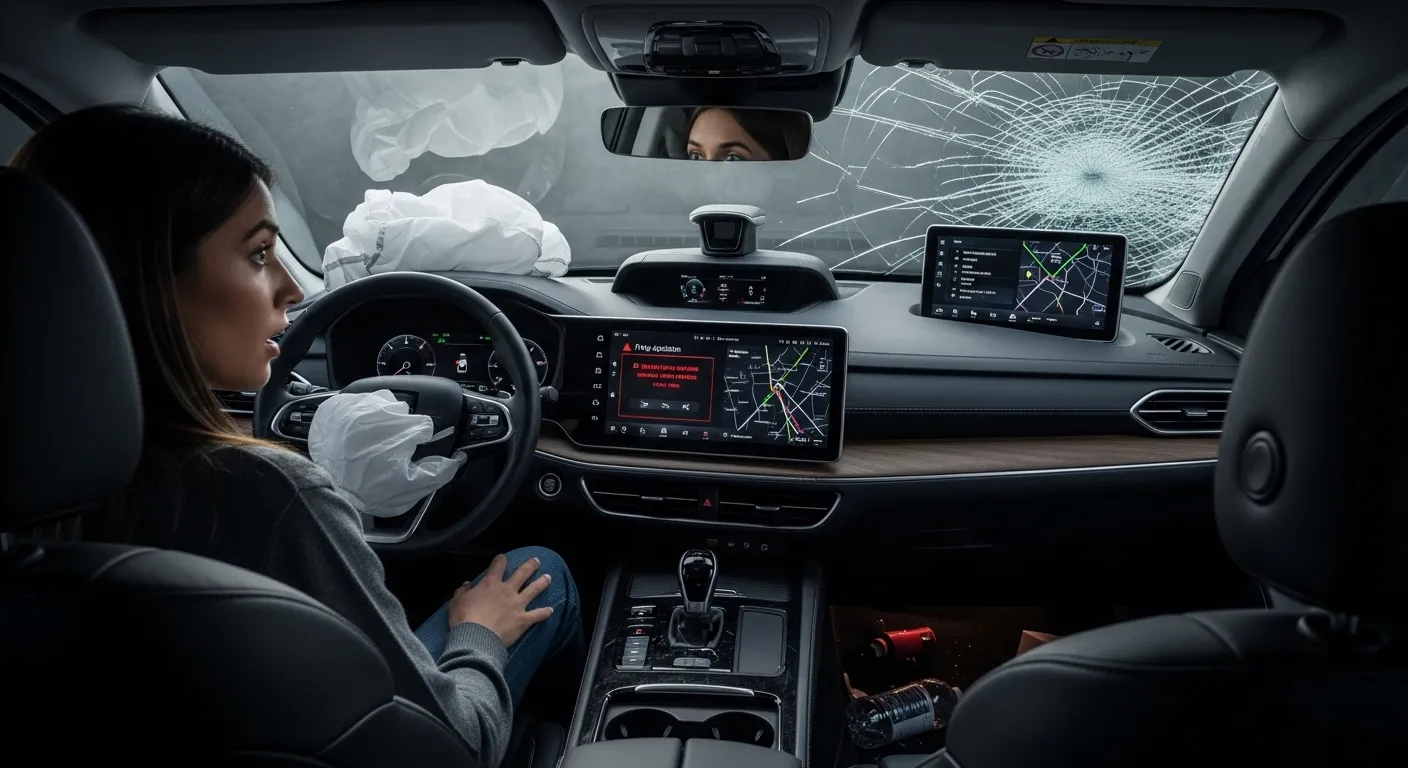
Robotaxi injury claims matter more in 2026 because self-driving rideshare services are moving from limited pilots into broader real-world use. Once that happens, injury law has to deal with more than theory. It has to deal with passengers who get hurt during an active trip, pedestrians who claim the vehicle did not react correctly, and other drivers who say the automated vehicle behaved in an unsafe way.
Self-Driving Rideshare Services Are Moving Into Daily Traffic
The legal significance of robotaxis comes from exposure. A technology can seem distant when it only appears in demos, closed tests, or promotional videos. However, once the same system starts operating on public roads with paying riders, every mistake has legal consequences. That is when questions about fault, insurance, and evidence become practical instead of speculative.
More public deployment means more real injury scenarios
A robotaxi claim can arise in several ways. A passenger may get injured when the vehicle stops abruptly, reacts poorly to traffic, or becomes part of a collision with another car. A pedestrian may claim the vehicle failed to detect a crossing movement. A cyclist may argue that the vehicle misjudged road space or timing. In another situation, the crash may start with a human driver, but the automated vehicle’s behavior may still become part of the liability story.
For that reason, these cases can look very different from ordinary rideshare claims. The injuries may be familiar, such as fractures, head injuries, spinal trauma, soft tissue damage, and lost income. Still, the proof may be more technical and the liability analysis may be wider from the beginning.
These cases affect more than paying passengers
Many people hear the word robotaxi and picture only the rider inside the car. That is too narrow. A self-driving rideshare crash can affect passengers, people in nearby vehicles, pedestrians in crosswalks, and cyclists sharing the same corridor. In dense urban settings, one system decision can create consequences for several people at once.
That is one reason this topic works well as a companion to your existing car accident guide. The injuries and damages may still follow familiar patterns, but the fact pattern behind the crash can look far more complex.
Liability Does Not Disappear Just Because There Is No Human Driver
One of the biggest misconceptions in these cases is that the absence of a traditional driver automatically shifts blame to a technology company. That is not how injury law works. Liability still depends on proof. Someone has to show what happened, why the crash occurred, and how a person or company failed to act with reasonable care.
In some cases, another human driver may still be mostly at fault. In others, the vehicle operator, a fleet company, a maintenance contractor, or a technology-related entity may become part of the analysis. There can also be mixed-fault scenarios. A human driver may make one mistake while the self-driving system makes another. That makes robotaxi accident claims harder than ordinary crashes, not easier.
This is where your ADAS article becomes a strong internal link. Readers who want to understand how technology changes crash claims can move from this page to ADAS accident claims in 2026. That article covers the broader issue of technology-assisted crashes, while this post focuses on the next layer: rideshare vehicles operating with much less direct human control.
What to Do After a Robotaxi Crash and What Evidence Matters
Even though robotaxi cases feel modern, the first steps after a crash still follow basic personal injury principles. Get medical care. Document the event. Preserve evidence. Avoid making casual assumptions about fault before the facts are clear. Those steps still matter because a new kind of vehicle does not change the need to prove negligence, causation, and damages.
The Strongest Claims Are Built Early
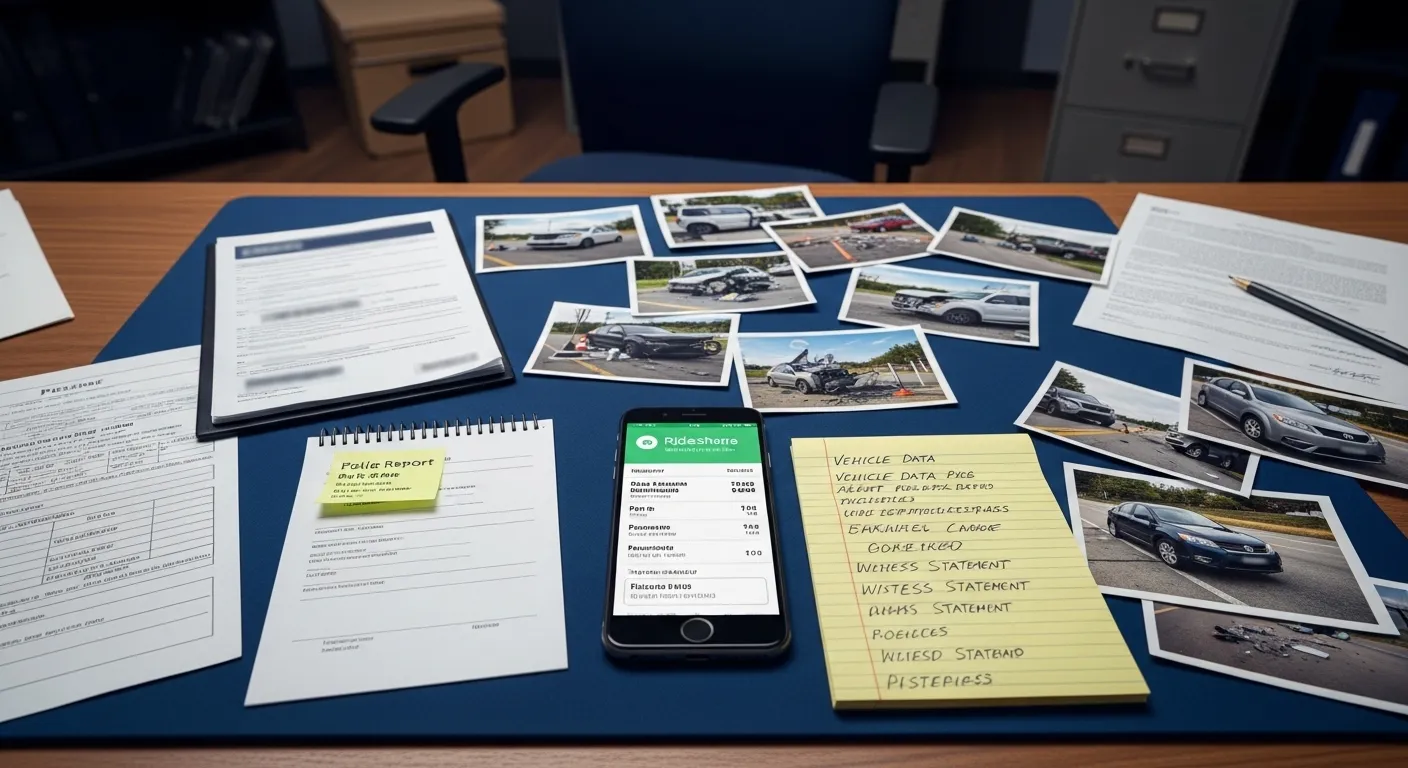
Timing matters in robotaxi accident claims because some of the most important evidence may be digital. Scene photos and witness names still matter, but they may not be enough. If a claim may involve automated driving conduct, plaintiffs may also need trip data, timestamps, app records, event logs, camera footage, or post-crash system records. Some of that evidence may sit in company-controlled systems, which means delay can hurt the case.
Digital records can matter as much as scene photos
After a serious self-driving rideshare crash, victims should try to preserve the same evidence they would preserve in any injury claim. That includes photos of the scene, names of witnesses, police report details, medical records, and proof of lost income. At the same time, robotaxi cases may also involve ride receipts, app screenshots, trip timelines, vehicle identifiers, and communications from the rideshare service.
Those details can help establish whether the trip was active, whether the person was a passenger, and which company controlled the ride. Later, those small facts may help tie the injury to the correct defendant and the correct legal theory. Readers who want the next procedural step can also move from here to filing a personal injury lawsuit: step-by-step guide.
Deadlines, treatment, and documentation still control the claim
Technology does not suspend ordinary injury rules. A robotaxi case still depends on prompt treatment, consistent documentation, and filing within the correct deadline. If an injured person waits too long, misses treatment, or loses evidence, the claim may weaken even if the vehicle’s behavior was questionable.
That is why the practical advice remains familiar. Seek medical attention right away. Save receipts and records. Keep screenshots from the rideshare app. Track missed work and follow-up care. Do not assume the company will preserve every helpful record on its own. If the injuries are serious, early legal review can help protect evidence and clarify who may be responsible.
This is also the right place to link readers to how settlements work in personal injury cases and statute of limitations in personal injury cases. Those two pages help ground the article in real claim handling, instead of leaving it as a general technology discussion.
For an outside authority, it makes sense to point readers to the NHTSA Standing General Order on Crash Reporting. That page helps explain why automated driving system crashes receive ongoing federal attention and why evidence in these cases can become more technical than in ordinary traffic collisions.
The bottom line is direct. Robotaxi accident claims are becoming more relevant because self-driving rideshare services now operate in real public settings while liability law is still adapting. These cases may involve serious injuries, more than one possible defendant, and a heavier need for digital evidence. For Injury Law Encyclopedia, that makes this topic timely, searchable, and easy to support with your existing content.