
Medical lien delays in personal injury settlements can frustrate injured people after a case finally resolves. A claimant may agree to a settlement, sign the release, and expect the check to arrive quickly. Then the payout slows because Medicare, Medicaid, a private health plan, a hospital, a doctor, or another medical provider may claim repayment from the settlement.
This process surprises many people because they often think settlement means the case has completely ended. In reality, settlement usually starts the final accounting stage. The insurance company must issue payment. The attorney must deposit and clear the funds. Then the legal team must review attorney fees, case costs, unpaid medical bills, health insurance reimbursement claims, and any provider liens before releasing the final balance.
A medical lien usually means a person or program claims a right to receive payment from the injury settlement. A reimbursement claim works in a similar way. If a health plan or medical provider paid for accident-related care, that party may seek repayment from the recovery. These claims can reduce the final settlement check and extend the timeline.
This guide explains how medical lien delays in personal injury settlements happen, why final checks may take longer than expected, and what injured people can do to prepare before settlement closes.
Why Medical Liens Can Delay Personal Injury Settlement Checks
Medical liens delay payouts because the final settlement amount does not always equal the amount the injured person takes home. A settlement may need to cover attorney fees, litigation expenses, unpaid medical bills, reimbursement claims, and valid liens before the claimant receives the remaining funds.
The delay often comes from verification. The legal team needs to confirm who paid which bills, which charges relate to the accident, whether a lien holder has valid recovery rights, and whether the amount can be reduced. A rushed payout can leave the injured person exposed to future collection efforts or unresolved repayment demands.
Common lien holders in injury settlements
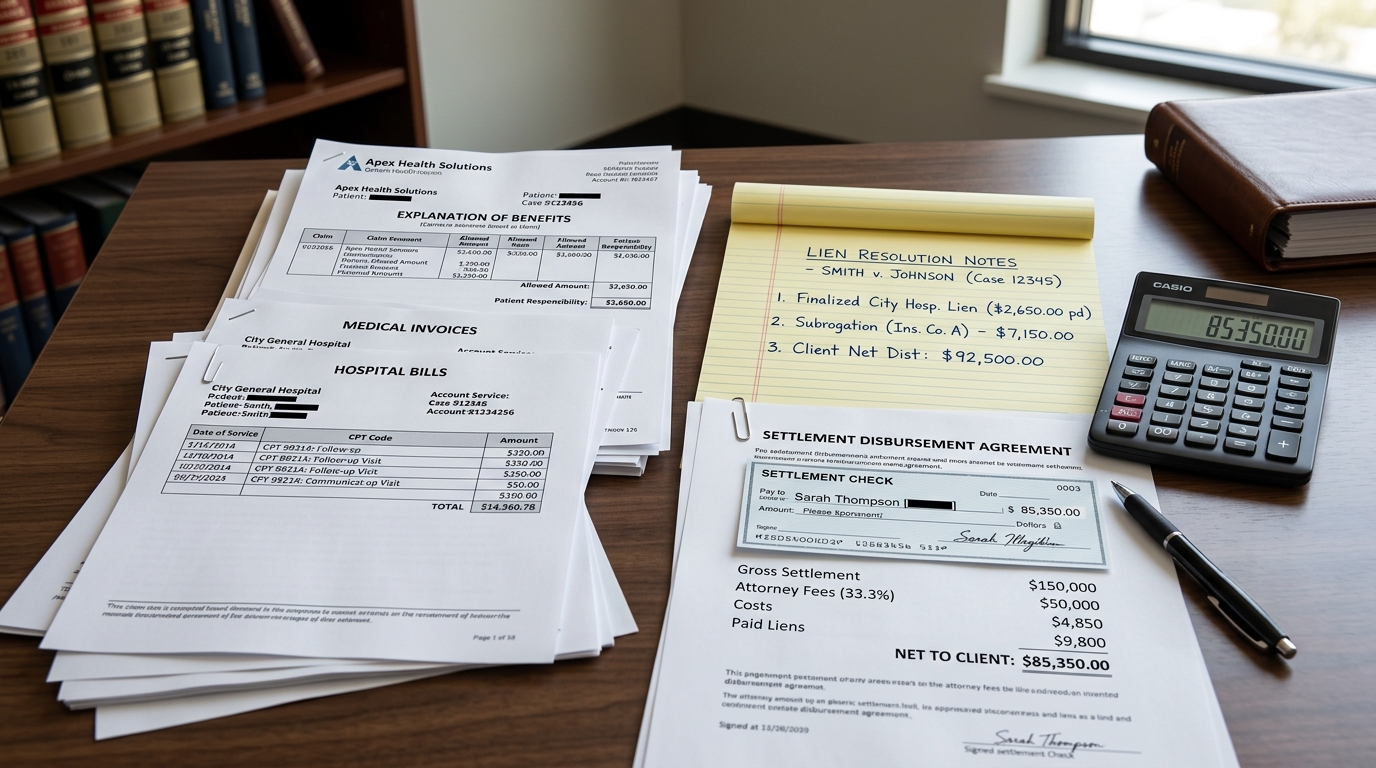
Several parties may claim repayment after a personal injury settlement. Medicare may seek repayment for conditional payments connected to accident-related care. Medicaid may pursue reimbursement when a third party caused the need for treatment. Private health insurance plans may claim reimbursement under plan language. Hospitals, doctors, imaging centers, ambulance companies, chiropractors, and physical therapists may also assert liens if they treated the patient under a lien agreement.
Some cases involve several lien holders at once. For example, a car accident claim may include emergency room charges, ambulance bills, imaging, surgery, follow-up visits, therapy, prescription costs, and health insurance payments. Each item needs review before anyone can calculate the final payout accurately.
Medicare and Medicaid claims need careful handling
Medicare and Medicaid reimbursement issues deserve special care. Medicare may pay medical bills conditionally when another party should ultimately pay. After settlement, Medicare may seek repayment for accident-related payments. Medicaid programs also use third-party liability rules to recover costs when another person or insurer has legal responsibility.
These claims can take time because agencies may need updated settlement information, payment summaries, disputed-charge review, and final demand amounts. If the agency includes unrelated treatment, the legal team may need to challenge those charges. That review can slow the final settlement check, but it can also protect the claimant from overpaying.
Private health plans may ask for reimbursement
Private health insurers may also request repayment after a settlement. Some plans include subrogation or reimbursement language that allows the plan to recover medical expenses from a personal injury recovery. Employer-sponsored plans may follow different rules than individual health plans, so the plan documents matter.
A reimbursement request does not always mean the amount is final. The legal team may review whether the plan has valid rights, whether the bills relate to the accident, whether the plan paid the correct amount, and whether a reduction applies. This step can take extra time, especially when the insurer sends incomplete or confusing records.
Why the final settlement check may not arrive immediately
After the parties agree to settle, several steps still need to happen. The injured person may need to sign a release. The insurance company may need time to process payment. The settlement check may need to clear the attorney trust account. Then the attorney must resolve liens, pay approved deductions, and prepare the final settlement statement.
The biggest frustration comes from timing. An injured person may hear that the case has settled and assume payment will arrive within days. Sometimes that happens. In other cases, lien holders delay the process by taking weeks to send balances, update records, or confirm final payoff amounts.
Final demand letters can control the timeline
A final demand letter or payoff letter can control when the legal team safely releases settlement funds. Without a final figure, the attorney may need to hold money in trust. That can feel slow, but it helps prevent future disputes.
For example, if Medicare or a health plan later claims that repayment remains unpaid, the injured person could face collection pressure. Holding funds until the lien amount becomes clear may protect the claimant from a bigger problem later. The goal is not to delay payment. The goal is to release payment safely.
How Injured People Can Prepare for Medical Lien Issues
The best way to reduce lien delays is to identify medical payment issues early. Injured people should tell their attorney about every health plan, hospital, doctor, clinic, imaging center, therapist, ambulance provider, government benefit, unpaid bill, and collection notice connected to the accident.
Good records make the process smoother. Save medical bills, explanation of benefits forms, insurance cards, Medicare or Medicaid notices, provider statements, collection letters, pharmacy receipts, and settlement-related correspondence. Send new bills to the legal team as they arrive instead of waiting until settlement.
Steps that may reduce settlement delays

Start lien review before settlement talks end. Ask medical providers for updated balances. Review health insurance payment summaries. Confirm whether providers billed insurance or treated under a lien agreement. Separate accident-related treatment from unrelated medical care. Keep a clear list of every provider involved in the case.
This topic connects with Injury Law Encyclopedia’s guide on how settlements work in personal injury cases, because lien resolution affects the final amount a claimant receives. It also connects with filing a personal injury lawsuit, since some cases need litigation before settlement talks become serious.
Car accident victims should pay close attention to lien issues because crash-related care can involve emergency services, imaging, specialists, surgery, physical therapy, and long recovery timelines. Injury Law Encyclopedia’s article on car accidents, legal procedures, and compensation gives readers more background on how evidence and damages shape a claim.
Slip and fall cases can create the same problem. A fall injury may lead to ambulance transport, emergency care, orthopedic visits, imaging, injections, therapy, or surgery. Injury Law Encyclopedia’s guide on slip and fall injury claims can help readers understand why medical documentation and settlement preparation matter.
Negotiation may reduce the amount owed
A lien amount does not always equal the final repayment amount. Attorneys may dispute unrelated charges, request reductions, apply legal limits, negotiate provider balances, or ask a lien holder to account for attorney fees and case costs. Results vary, and no claimant should assume every lien will shrink automatically.
Still, lien review can make a major difference. A provider may list charges that health insurance already paid. A health plan may include treatment unrelated to the accident. A hospital may apply a balance that needs correction. Careful review can protect the injured person from paying more than necessary.
For an official federal resource, readers can review the Centers for Medicare & Medicaid Services page on Medicare’s recovery process here: CMS Medicare Recovery Process.
Medical lien delays in personal injury settlements can feel discouraging, especially after months of treatment and negotiations. However, lien resolution often protects the injured person. It confirms who must be repaid, what amount applies, and how much money can safely go to the claimant.
The smartest approach is preparation. Track every medical bill. Report every health plan. Save every notice. Ask questions before signing the settlement release. Review the final settlement statement carefully. A clean lien resolution process can reduce surprises and make the final payout more reliable.
This article is for general educational purposes only and is not legal advice. Medical lien rules, Medicare recovery, Medicaid reimbursement, private health plan rights, provider liens, settlement procedures, and legal deadlines vary by location and case facts. Speak with a licensed attorney about a specific personal injury settlement.