
AI-generated evidence in injury claims has become a major legal concern in 2026 because people can now create, edit, enhance, or manipulate digital files faster than ever. A photo can look real even after someone changes the background. A video can appear believable even if software altered the scene. A screenshot can look authentic even if someone created it from scratch. That reality creates new problems for injured people, insurance companies, attorneys, and courts.
Personal injury claims depend on evidence. Accident photos, medical records, police reports, repair estimates, witness statements, dashcam footage, surveillance video, text messages, wearable data, and social media posts can all affect settlement value. When AI tools enter the picture, everyone must ask a simple question: does this file show what it claims to show?
This does not mean every digital record deserves suspicion. Most claim evidence still comes from ordinary phones, cameras, medical providers, businesses, vehicles, and official records. However, AI-generated evidence in injury claims makes authentication more important. A strong case needs original files, clear timelines, metadata, witness support, and honest documentation.
This guide explains how AI-edited photos, synthetic videos, fake screenshots, metadata problems, and digital records can affect injury claims in 2026.
Why AI-Generated Evidence Creates New Problems in Injury Claims
Digital evidence already plays a central role in injury cases. A crash victim may take photos of vehicle damage. A fall victim may photograph a wet floor. A pedestrian may save dashcam footage from a witness. A patient may keep medical records to prove treatment. These files can help explain what happened and how badly the injury affected daily life.
AI tools create risk because they can change what digital evidence appears to show. A person may remove an object from a photo, brighten damage too aggressively, alter timestamps, generate a fake scene, create a false screenshot, or use synthetic audio. Even a small edit can create credibility problems if it changes the facts.
Photos and videos need stronger authentication
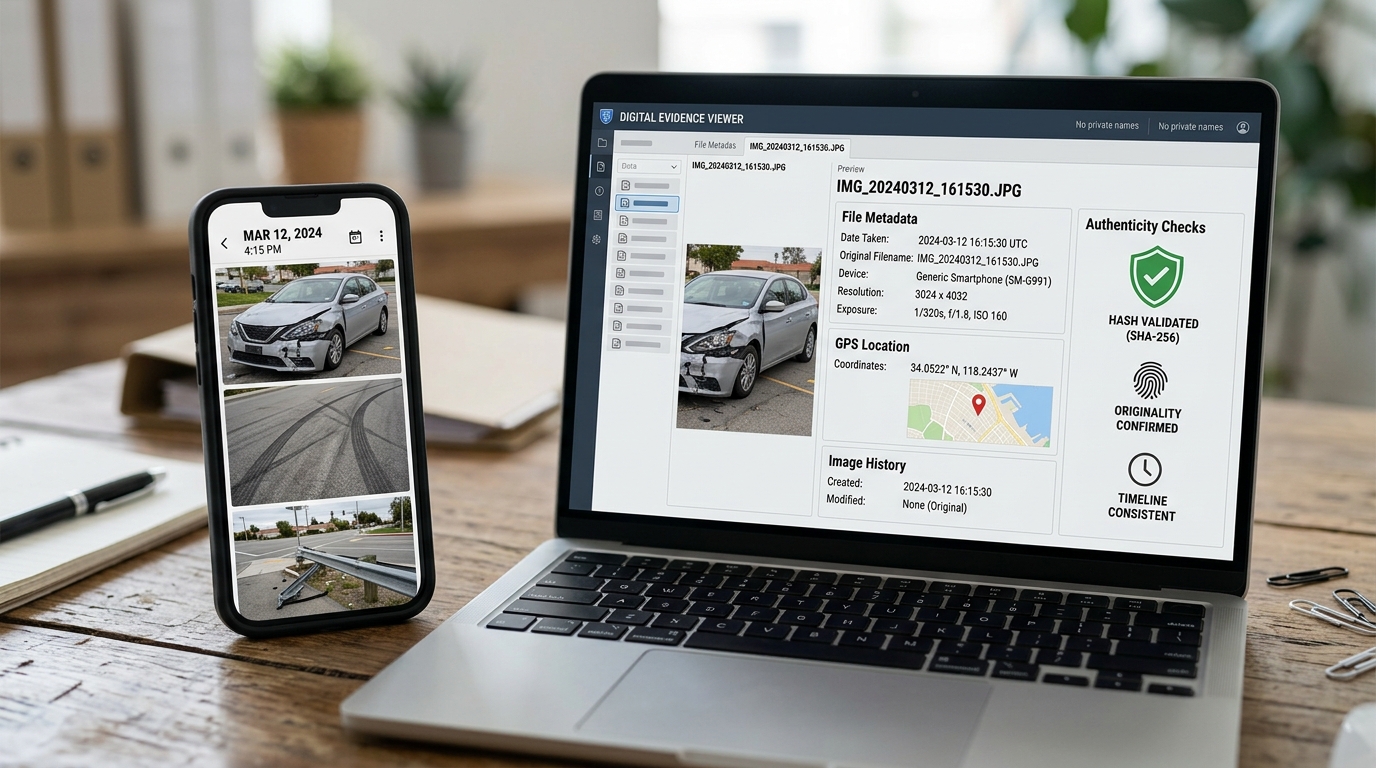
Photos and videos often look persuasive because people trust what they can see. That trust weakens when editing tools become easy to use. An accident photo may show vehicle damage, a broken stair, poor lighting, unsafe flooring, a pothole, or visible injuries. If someone edits that file carelessly, the other side may challenge the entire image.
Basic edits do not always create a problem. Cropping a photo or adjusting brightness for visibility may help people understand the image. The key is to keep the original version. Fact-changing edits create a much bigger risk. Removing objects, adding hazards, changing colors, exaggerating damage, or altering body position can make evidence unreliable.
Original files matter more than screenshots
Original files usually provide better evidence than screenshots. A phone image may contain creation time, device information, GPS data, file history, and other metadata. A screenshot often strips away much of that information. Messaging apps can also compress images and remove useful details.
Injured people should save original accident photos and videos in more than one safe place. They should avoid filters, automatic cleanup tools, background replacement, object removal, and heavy AI enhancement. If someone creates an edited copy for presentation, the original should remain untouched and clearly labeled.
Metadata can support the evidence timeline
Metadata can help confirm when, where, and how someone created a file. It may show the date, device, location, file type, or editing history. Metadata does not prove everything by itself, but it can support the claim when it matches medical records, police reports, witness statements, and other evidence.
Insurance companies may question files with missing metadata, strange timestamps, heavy editing history, or unclear sources. Missing metadata does not automatically mean a file is fake. Many apps remove it automatically. Still, original files reduce confusion and make the evidence easier to verify.
Deepfakes and fake screenshots can damage credibility
Deepfakes and synthetic media create a more serious problem. These files can make a person appear to say or do something that never happened. In an injury claim, fake media could target fault, activity level, injury severity, witness statements, settlement discussions, or medical condition.
A fake video might show an injured person lifting heavy objects after reporting a back injury. A manipulated audio clip might make a driver appear to admit fault. A false screenshot might create a conversation that never occurred. Even when people later expose the fake, it can still waste time, increase costs, and create doubt.
Insurance disputes may focus on digital trust
Insurance companies already review claim evidence closely. In 2026, they may look harder at file history, image quality, social media activity, timestamps, wearable data, and possible manipulation. That review can help detect fraud, but it can also slow legitimate claims when ordinary files raise technical questions.
Claimants should not answer this risk with shortcuts. They should answer it with organization. Keep original records. Save medical documents. Preserve communication. Document the accident honestly. A clean evidence file makes it harder for an insurer to turn minor questions into major disputes.
How Injured People Can Protect Digital Evidence in 2026
Evidence protection should start immediately after an accident. Take photos and videos only when it is safe. Capture wide shots, close-ups, lighting conditions, road signs, floor hazards, vehicle positions, visible injuries, property damage, weather, and anything that helps explain the scene. Do not stage anything. Do not move objects just to make the image look stronger.
After documenting the scene, preserve the files. Save originals to a secure folder, cloud backup, or external drive. Keep copies organized by date. Write short notes about where the file came from and what it shows. That simple habit can prevent confusion months later.
Build a clean digital evidence timeline
A strong injury claim tells a consistent story. The accident report, photos, medical records, witness statements, repair bills, work records, and digital files should match each other. When the timeline stays organized, insurers have fewer chances to attack credibility.
Start with the accident date. Add emergency care, doctor visits, imaging, prescriptions, therapy, bills, lost wage records, and communication with insurers. Place photos and videos in the order you captured them. Keep original filenames when possible.
This topic connects with Injury Law Encyclopedia’s article on social media surveillance in personal injury claims. Online posts, tagged photos, comments, and screenshots can support or hurt a case depending on context and authenticity.
Wearable records can also become part of the timeline. Injury Law Encyclopedia’s guide on wearable device evidence in personal injury claims explains how smartwatches, fitness trackers, GPS data, and health apps may show activity changes before and after an injury.
AI insurance review adds another layer. Injury Law Encyclopedia’s article on AI insurance claim reviews in 2026 explains how automated systems may review claim records, flag inconsistencies, and influence settlement evaluations.
Do not generate or recreate accident evidence

Never use AI to recreate an accident scene and present it as real evidence. A visual reconstruction may help explain a theory, but it must carry a clear label as an illustration. Passing off generated images, synthetic audio, fake screenshots, or edited videos as real proof can destroy credibility and create serious legal problems.
If a claimant needs to explain what happened, better options exist. Use honest descriptions, diagrams, witness statements, official reports, expert analysis, and properly labeled demonstrative exhibits. Courts and insurers care about the difference between real evidence and an illustration. Mixing those categories creates avoidable risk.
Federal Rule of Evidence 901 focuses on authentication, meaning the party offering evidence must produce support that the item is what the party claims it is. Readers can review the rule here: Federal Rule of Evidence 901.
AI-generated evidence in injury claims will keep growing as editing tools become easier to use. That trend does not make every claim weaker. It makes careful documentation more valuable. Injured people who preserve originals, avoid misleading edits, and keep consistent records can protect their credibility.
The safest rule is simple: document honestly, preserve original files, label edits clearly, and never create fake proof. A personal injury claim should rely on real records, real treatment, real timelines, and real damages. AI may help organize information, but it should never replace authentic evidence.
This article is for general educational purposes only and is not legal advice. Evidence rules, insurance procedures, privacy rights, discovery duties, and claim deadlines vary by location and case facts. Speak with a licensed attorney about a specific injury claim.