Social media surveillance in personal injury claims has become a serious issue in 2026 because people share more daily activity online than ever before. A photo, short video, comment, location tag, story, repost, fitness update, or tagged image can become part of an insurance dispute. What feels like a normal post to a user may look very different when an insurance adjuster reviews it without context.
Personal injury claims depend on proof. Medical records show diagnosis and treatment. Photos can show damage or unsafe conditions. Witnesses can describe what happened. Wage records can show income loss. Social media adds another layer because it may reveal activity, mood, travel, movement, hobbies, or statements made after the accident.
This does not mean injured people should panic or delete everything. That can create bigger problems. The better approach is to understand how online activity may affect credibility, damages, privacy, and settlement value. Insurance companies often look for inconsistencies. A post does not need to prove fraud to create questions. It only needs to give the insurer a reason to challenge the claim.
This guide explains how social media surveillance in personal injury claims works, what injured people should avoid posting, and how digital evidence can help or hurt a case.
Why Social Media Surveillance Matters in Injury Claims
Insurance companies evaluate both liability and damages. Liability focuses on who caused the accident. Damages focus on how badly the injury affected the person’s life. Social media can touch both issues. A comment about the accident may affect fault. A photo at an event may affect how the insurer views pain, mobility, or emotional distress.
Online content often creates problems because it shows fragments, not full reality. A smiling photo does not show pain medication. A family dinner does not show limited movement the next morning. A short walk does not show the soreness that follows. Still, insurers may use selected posts to argue that the injury looks less serious than claimed.
What online activity may become evidence?
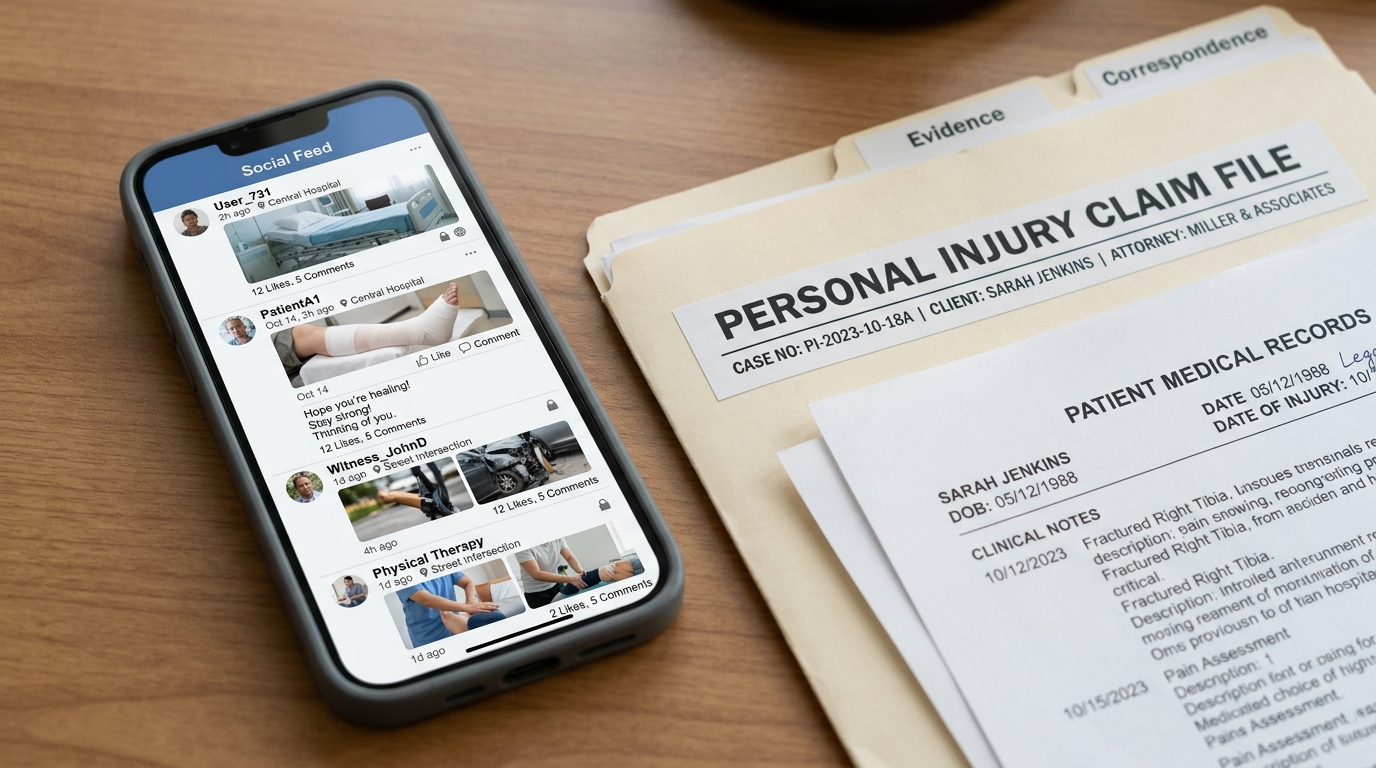
Many types of activity can matter. Photos, videos, stories, reels, comments, captions, direct messages, location tags, event check-ins, reviews, group posts, fitness screenshots, and tagged content may all appear in a claim dispute. A friend’s post can also create issues if it shows the injured person doing something the insurer believes contradicts the claim.
Metadata can matter too. A photo may carry a date, time, device detail, or location signal. A post may reveal travel, physical activity, or social plans. That information can support a timeline, but it can also raise questions when it appears inconsistent with medical records.
Photos and videos can look different without context
A photo captures one second. It does not show the full day, the full injury, or the recovery afterward. A person with a back injury may smile at a birthday party for one picture, then sit down for the rest of the event. A person with a knee injury may stand briefly for a group photo, then need ice and medication later.
The danger comes from presentation. An insurer may show one post and ignore the larger recovery picture. Medical records, treatment notes, pain journals, work restrictions, and witness statements can help explain what the post does not show.
Comments can create unnecessary claim problems
Comments often cause more trouble than photos because people write them quickly. A casual “I’m fine” after a crash may mean the person felt relieved to be alive. An insurer may later argue that the comment proves the injury was minor. A joke about the accident may also look careless when someone reads it months later during a claim review.
Injured people should avoid posting about fault, pain levels, treatment, settlement talks, legal strategy, or insurance conversations. They should also avoid arguing about the accident online. Screenshots can travel fast, even from private groups.
How social media can help a personal injury claim
Social media does not only hurt claimants. It can also help when it supports a clear before-and-after story. Posts before the injury may show an active work routine, hobbies, family responsibilities, travel, exercise, or normal movement. Posts after the injury may show missed events, reduced activity, medical devices, mobility limits, or a major lifestyle change.
This type of evidence works best when it matches medical records. If a person regularly posted hiking photos before a crash and then stopped after a leg injury, that pattern may support the damages claim. If a parent stopped posting normal family outings after a spinal injury, that change may help show real-life impact.
Before-and-after evidence should stay honest
A strong claim does not need staged suffering. It needs honest documentation. Injured people should not exaggerate symptoms online, but they should also avoid creating a misleading impression that everything returned to normal. The safest approach is balanced and truthful.
This topic connects with Injury Law Encyclopedia’s article on wearable device evidence in personal injury claims. Social media posts and wearable records may overlap because both can show movement, activity, sleep, recovery patterns, and daily limits.
How Injured People Can Protect Their Claim Online
Injured people should treat social media like public evidence once a claim begins. Privacy settings help, but they do not make online activity invisible. Friends can screenshot posts. Tagged content can appear on other accounts. Courts may allow relevant social media discovery in some cases. A private profile does not guarantee full protection.
The smartest move is to post less and preserve more. Do not delete posts without legal guidance, especially after a claim starts. Deleting relevant content can create accusations that the person destroyed evidence. Instead, save important records, avoid careless posting, and keep the claim timeline organized.
Practical rules for posting during an injury claim

Do not post about the accident, injuries, treatment, settlement value, attorney conversations, or insurance negotiations. Avoid activity videos that lack context. Do not post gym updates, travel photos, dancing clips, sports activity, or fitness milestones while the claim remains active unless a lawyer says the risk is low. Even harmless content can become a problem when an insurer presents it selectively.
Ask family and friends not to tag you in posts about outings, events, travel, or physical activity. They may mean well, but a tagged image can still create confusion. If someone posts about the accident, ask them to avoid discussing fault, injuries, or claim details.
This connects with Injury Law Encyclopedia’s guide on AI insurance claim reviews in 2026. Automated tools may review claim records, photos, digital patterns, and possible inconsistencies. Clean documentation helps reduce confusion when insurers use technology to sort or evaluate claims.
Car accident victims should stay especially careful. A person may post that they feel “okay” right after a crash because adrenaline masks symptoms. Pain may develop later. Injury Law Encyclopedia’s article on car accidents, legal procedures, and compensation explains why documentation, medical care, and insurance steps matter after a collision.
Preserve relevant content instead of deleting it
If online content relates to the accident, injuries, recovery, or daily limitations, preserve it. Save screenshots, dates, captions, comments, tags, URLs, and original files when possible. Do not edit captions, remove posts, or delete accounts without legal guidance. Preservation protects credibility and helps avoid claims that evidence disappeared.
The American Bar Association discusses social media preservation and explains that social media content may belong in litigation-hold notices when it relates to potential evidence. Readers can review the ABA resource here: ABA discussion on discovery and preservation of social media evidence.
Injury claims still rely on the basics. A claimant must show what happened, who may be responsible, how the injury connects to the incident, and what damages resulted. Injury Law Encyclopedia’s article on how settlements work in personal injury cases can help readers understand why evidence affects negotiations. The guide on filing a personal injury lawsuit also explains what may happen when a claim does not resolve through settlement.
Social media surveillance in personal injury claims will likely keep growing as people share more digital activity. Insurers may review posts, photos, comments, location tags, fitness updates, and online behavior to challenge damages or credibility. Injured people do not need to fear every post, but they should act with discipline.
The best rule is simple: post less, preserve relevant content, avoid case discussions, and keep medical documentation strong. A personal injury claim should tell the truth through reliable evidence. Social media should not give the insurance company an easy way to distort that truth.
This article is for general educational purposes only and is not legal advice. Personal injury rules, evidence rules, privacy rights, discovery duties, and claim deadlines vary by location and case facts. Speak with a licensed attorney about a specific injury claim.