AI insurance claim reviews are becoming a major issue for injury victims in 2026. Insurance companies now use digital tools to sort claims, review photos, estimate damage, flag fraud risks, summarize records, and support settlement decisions. These systems can speed up simple claims, but they can also create problems when a serious injury needs human judgment.
A personal injury claim is not just a data file. It includes pain, treatment, lost income, stress, family disruption, future care, and daily limitations. When an automated review misses those details, an injured person may receive a low offer before the full damage picture becomes clear.
This guide explains how AI insurance claim reviews may affect injury settlements. It also shows what evidence victims should organize and why human review still matters in serious cases.
Why AI Insurance Claim Reviews Matter in 2026
Artificial intelligence is now part of many insurance operations. The National Association of Insurance Commissioners explains that insurers use AI in areas such as underwriting, pricing, customer service, claims handling, marketing, and fraud detection. The NAIC also notes that AI can help estimate repair costs or assess damage using photos and historical data.
For official background, readers can review the NAIC resource on artificial intelligence in insurance. This trend matters because insurance decisions can affect medical bills, vehicle repairs, wage losses, and settlement timing.
A faster process may sound helpful at first. However, speed can become a problem if the system pushes a claim toward a quick offer before the injury is fully documented.
Automated tools may focus on patterns, not people
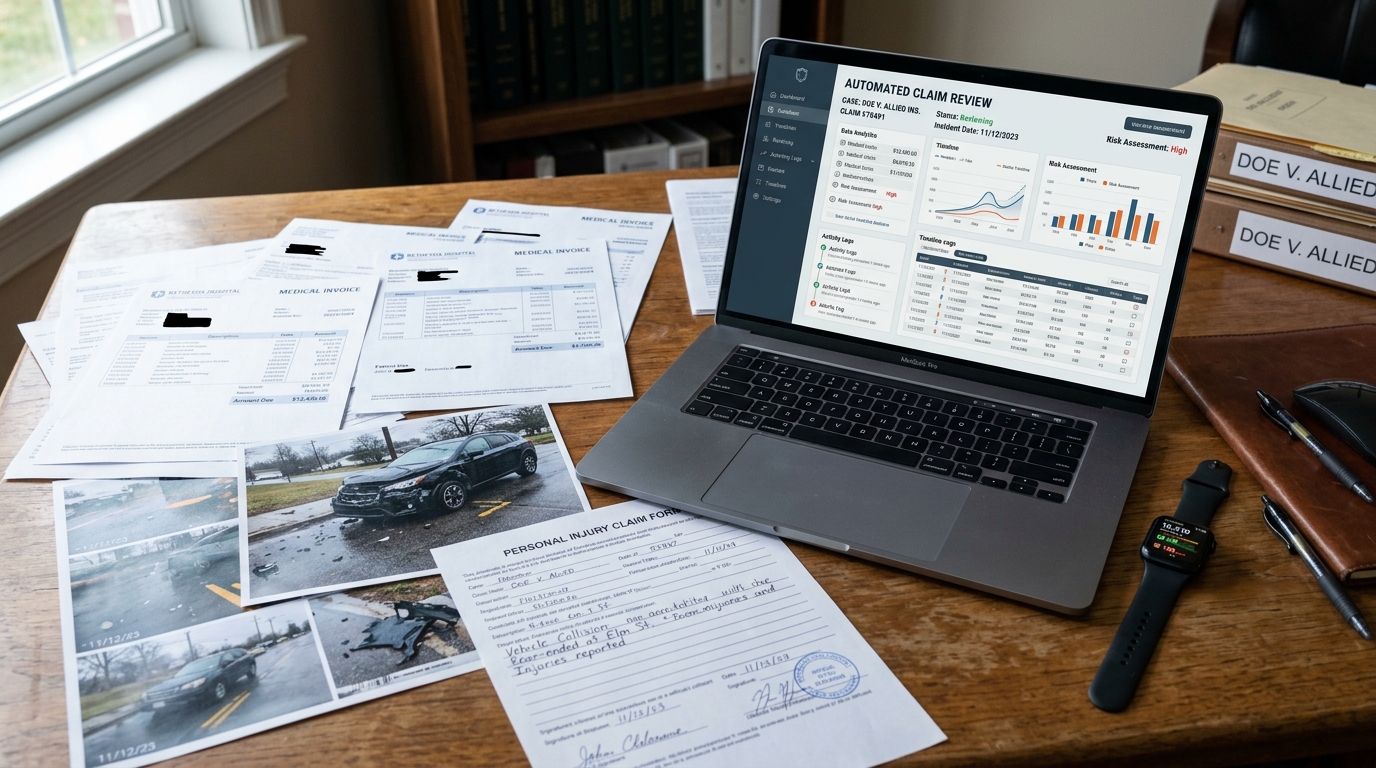
AI systems often look for patterns in large amounts of data. They may compare medical bills, treatment length, accident type, repair estimates, injury codes, and past settlements. That can help insurers sort claims faster.
However, the pattern may not fit every victim. Two people can have the same diagnosis but very different recovery paths. One person may return to work quickly, while another may need surgery, therapy, job changes, or long-term pain management.
If an automated tool treats those claims as similar too early, the result may feel unfair. This is why the evidence must tell the full story.
Fast does not always mean fair
A quick settlement offer can feel like progress. Still, it may arrive before doctors know the full diagnosis. It may also ignore future treatment, missed work, therapy, injections, surgery, or long-term symptoms.
Victims should be careful with early offers. Once a settlement is signed, the claim may close permanently. Therefore, it is risky to accept payment before understanding the medical outlook.
Incomplete records can lead to weak evaluations
AI claim tools can only review the information available to them. Missing medical records may make the claim look weaker. Unclear wage records may also reduce the value of lost income.
Pain symptoms need strong documentation too. Provider notes, symptom journals, treatment records, medical bills, work records, photos, prescriptions, and therapy plans can all help create a stronger claim file.
Fraud flags can create extra pressure
AI insurance claim reviews may also include fraud detection. Insurers have a legal and financial reason to investigate suspicious claims. Even so, automated fraud flags can create problems when they rely on incomplete or misunderstood data.
A claim may receive extra scrutiny because of treatment gaps, prior injuries, unusual billing patterns, delayed symptoms, or inconsistent records. Sometimes those issues have reasonable explanations. A victim may have waited for an appointment, lacked transportation, had no health insurance, or tried to work through pain.
If the insurer treats a normal complication like a red flag, the injured person may face delays, more questions, or a lower offer. Clear documentation can reduce that risk.
Human review should explain unusual details
Unusual facts do not always mean fraud. A treatment gap may happen because a clinic had no openings. A prior injury may be unrelated to the new accident. Someone may return to work while still hurt because they need income.
Human review matters because context matters. Victims should explain gaps, prior conditions, missed appointments, changed providers, and delayed symptoms. Otherwise, an automated system may treat missing context as weakness.
How Injury Victims Can Protect Their Claim From Automated Mistakes
The best response to AI insurance claim reviews is preparation. A strong claim file helps human adjusters, attorneys, medical experts, and automated tools understand what happened. It also makes it harder for an insurer to dismiss the injury as minor.
Start with medical care. Follow treatment instructions, attend appointments, save records, and report symptoms clearly. When pain changes, tell the provider. If work becomes difficult, ask for written restrictions.
Next, preserve accident evidence. Save photos, videos, police reports, witness names, repair estimates, insurance letters, emails, and claim numbers. A good timeline can connect the accident, injury, treatment, and damages.
Evidence should show the full claim timeline
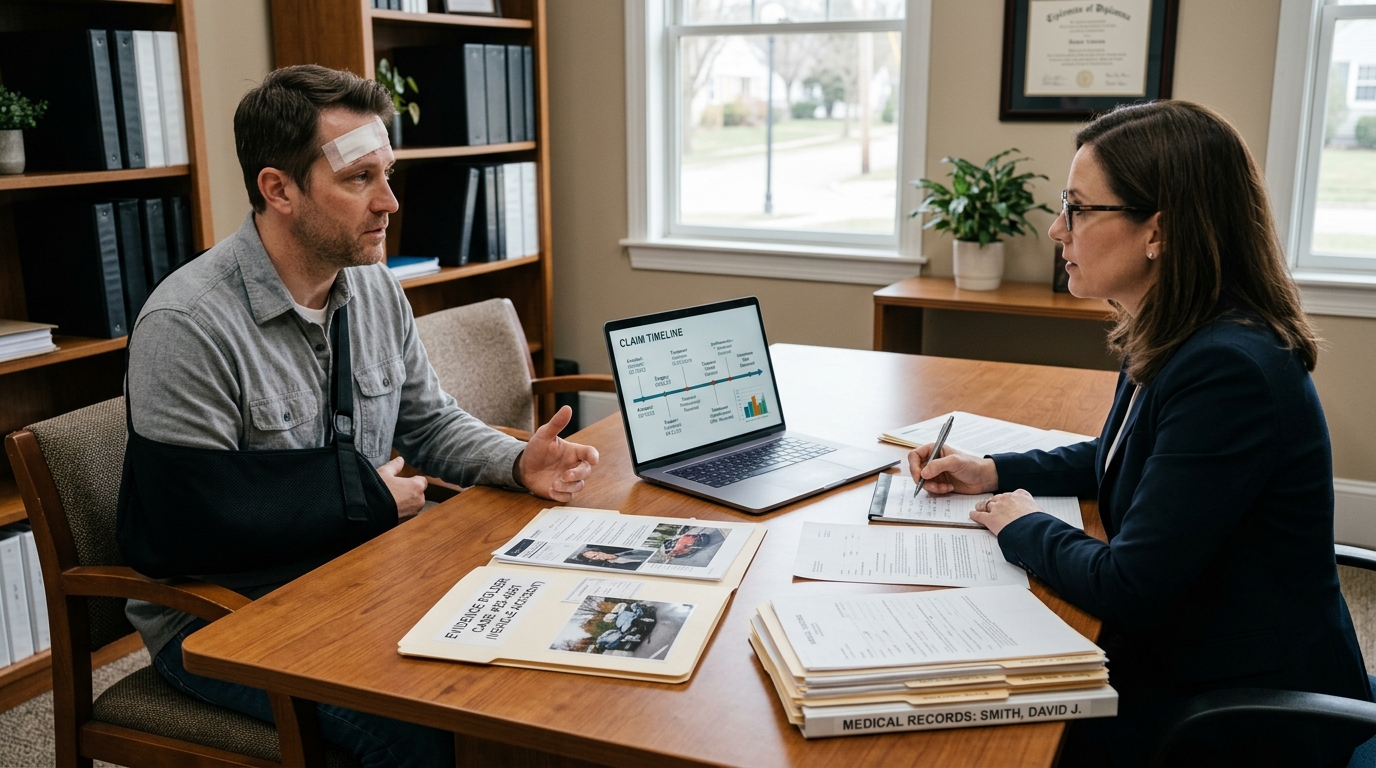
A strong timeline helps fight low automated evaluations. It should show the accident date, first medical visit, diagnosis, treatment plan, follow-up appointments, work restrictions, pain changes, and settlement communications. It should also explain why any gaps happened.
For car crashes, accident photos and repair documents can support the claim. For technology-related crashes, system data may matter too. Injury Law Encyclopedia’s article on ADAS accident claims in 2026 explains how driver-assist features can create new evidence questions after a crash.
Robotaxi and autonomous vehicle cases can involve even more data. Logs, video, route information, vehicle sensors, and company records may all matter. For that topic, readers can visit robotaxi accident claims in 2026.
Medical notes should describe real-life limits
Medical records should do more than list a diagnosis. They should describe how the injury affects daily life. Can the person lift, drive, sleep, sit, walk, work, cook, or care for family?
These details matter because automated tools may not understand pain unless the records explain it. A clear provider note can make the difference between a vague claim and a well-supported injury file.
Digital records can also support the timeline. Wearables may show reduced steps, poor sleep, or activity changes. Injury Law Encyclopedia’s article on wearable device evidence in personal injury claims explains how smartwatch and fitness tracker records may support modern injury cases.
AI insurance claim reviews can also affect medical malpractice claims. If healthcare technology, diagnostic software, or automated systems contribute to harm, the claim may require both medical and technical evidence. Injury Law Encyclopedia’s article on AI medical malpractice claims in 2026 supports that broader discussion.
Be careful when communicating with insurers. Recorded statements, broad medical authorizations, casual comments, and quick settlement discussions can all affect the claim. Keep answers accurate, simple, and consistent.
If a settlement offer seems too low, ask what records the insurer reviewed. Did they include all treatment notes? Do they consider future care? Did they review wage loss, pain, restrictions, and daily limitations?
Some claims may require legal action if the insurer refuses to review the full evidence fairly. Injury Law Encyclopedia’s guide on filing a personal injury lawsuit explains the basic steps involved when a claim cannot resolve through ordinary negotiation.
AI insurance claim reviews in 2026 are not automatically bad. They may help organize files, estimate simple damage, and speed up routine claims. Serious injuries, however, still need careful human review.
For injury victims, preparation is the best protection. Document everything, keep records organized, explain gaps, avoid rushed settlements, and make sure the claim file shows the full impact. In a world where insurance systems move faster, victims need evidence that speaks clearly.
General information only. This article is for educational purposes and is not legal advice. Insurance laws, evidence rules, claim procedures, and personal injury deadlines vary by location and case facts. Speak with a licensed attorney about a specific injury claim before accepting a settlement or sharing sensitive records.