Wearable device evidence is becoming a bigger issue in personal injury claims as more people use smartwatches, fitness trackers, sleep apps, heart-rate monitors, and connected health devices every day. These devices can record steps, activity levels, sleep patterns, workouts, heart rate, falls, location history, and recovery trends. After an accident, that information may help explain how an injury changed someone’s daily life.
Personal injury claims often depend on proof. Medical records show diagnosis and treatment. Accident reports describe what happened. Photos show damage or unsafe conditions. Witnesses explain what they saw. Wearable data can add another layer by showing patterns before and after the injury. If a person walked 8,000 steps a day before a crash and struggled to reach 2,000 steps after it, that pattern may help support the claim.
However, wearable device evidence is not magic. A smartwatch does not replace a doctor, medical records, expert review, or legal analysis. The data may support a claim, but it can also create problems if the insurance company uses it out of context. A low-activity day may come from pain, but it may also come from weather, a dead battery, a missed sync, travel, or simply not wearing the device.
Injury Law Encyclopedia already covers claim basics in Filing a Personal Injury Lawsuit: Step-by-Step Guide and How Settlements Work in Personal Injury Cases. This article focuses on how wearable data may fit into evidence, settlement negotiations, privacy concerns, and injury documentation in 2026.
Why Wearable Device Evidence Matters In 2026
Wearable devices matter because injury claims often involve symptoms that are hard to measure with one test. Pain, fatigue, sleep disruption, reduced movement, anxiety, and loss of normal activity can affect daily life, but they may not always appear clearly on an X-ray, MRI, or emergency room note. Wearable data may help show how life changed after the incident.
For example, a smartwatch may show reduced walking after a car crash. A sleep tracker may show that pain interrupts rest. A heart-rate record may show unusual stress during recovery. A fall-detection alert may help confirm the timing of a fall. These details can support the larger claim when they match medical records, provider notes, and the injured person’s timeline.
Wearable data can show changes before and after an injury
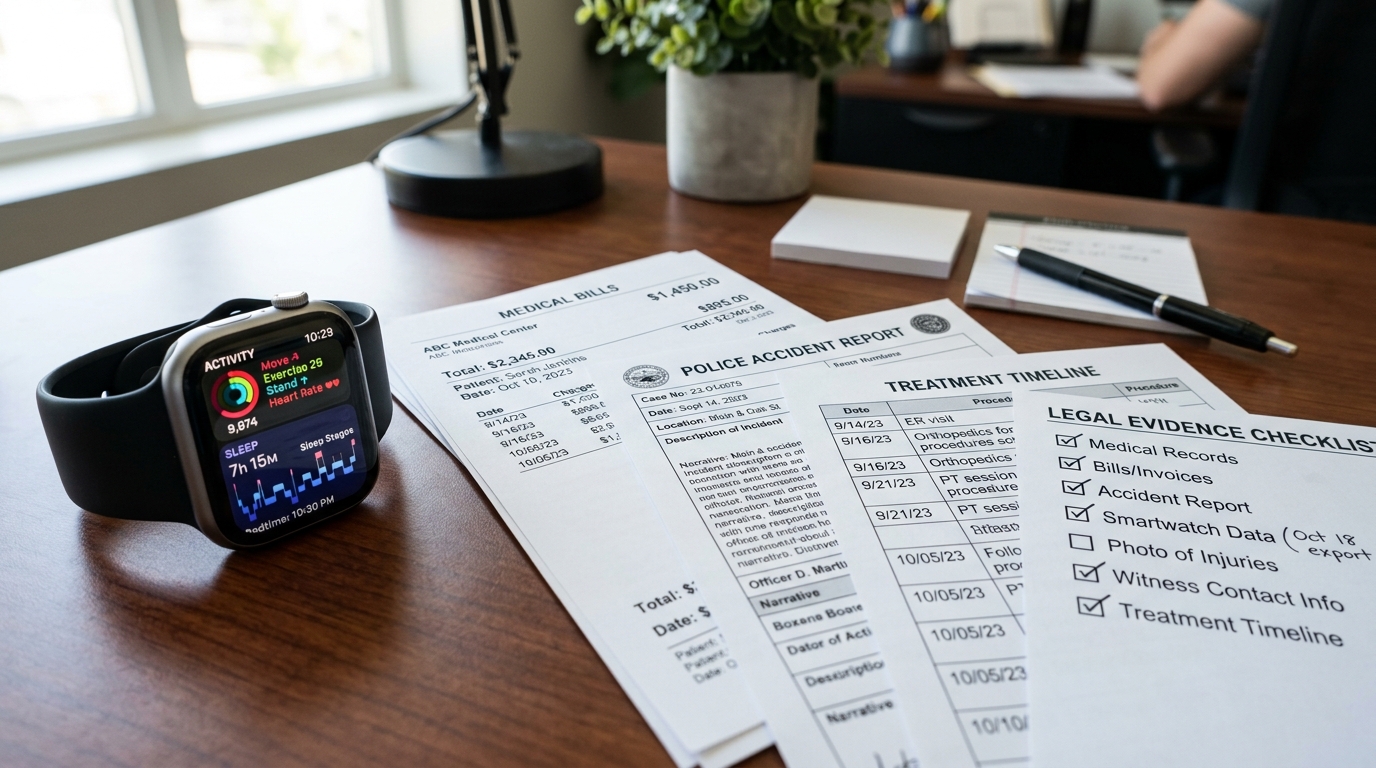
The strongest use of wearable data often comes from comparison. One isolated number does not prove much. A pattern over time can say more. If activity levels dropped immediately after a crash and stayed low during treatment, that trend may support the claim that the injury affected mobility and daily function.
This can matter in many types of cases. In a car accident claim, step counts may show reduced movement after back or knee injuries. In a slip and fall case, sleep and activity records may support complaints of pain. In a workplace injury case, movement data may show that the injured person cannot return to the same physical routine.
Data should match medical records and symptoms
Wearable data works best when it fits with other proof. If medical notes describe knee pain, physical therapy records show limited range of motion, and wearable data shows reduced walking, the evidence becomes more persuasive. The records support each other.
If the data does not match the medical record, the insurance company may use that conflict against the injured person. That is why victims should describe symptoms clearly during medical visits. Tell the provider how the injury affects walking, sleeping, driving, working, lifting, stairs, exercise, and daily chores.
Insurance companies may use wearable data both ways
Many injured people think wearable data can only help them. That is not always true. Insurance companies may try to use the same data to question the claim. If the device shows activity after the accident, an adjuster may argue that the injury was not serious. If the device shows a workout, stairs, travel, or higher step counts, the insurer may try to reduce the settlement value.
This does not mean injured people should hide evidence. It means they need context. A person may walk more on one day because they had a medical appointment, grocery trip, or family responsibility, then suffer more pain afterward. Raw data may not explain that. A pain journal, treatment notes, and provider restrictions can help fill the gap.
Do not post wearable milestones without thinking
Social media can create problems when people post activity screenshots without context. A photo of a step goal, gym visit, hike, or fitness app badge may look harmless, but an insurance company may use it to argue that the injury improved or never existed.
Be careful with public posts while a claim is pending. Do not exaggerate symptoms, but do not give insurers easy material to twist. If you are recovering, keep records privately and discuss them with your provider or attorney instead of turning them into online updates.
How To Use Wearable Data Safely In An Injury Claim
Using wearable device evidence safely means preserving the data, protecting privacy, and connecting the information to the legal issues in the case. The question is not simply whether the device recorded something. The better question is whether the data is relevant, accurate, complete, and useful.
For privacy background, the Federal Trade Commission explains that health apps, wearables, and connected devices may involve health information and may trigger federal privacy and security rules depending on how the data gets collected and used. Readers can review the FTC resource here: FTC guidance on health apps and connected devices.
Preserve data before it disappears
Wearable data can disappear, sync incorrectly, or become harder to access over time. If the information may matter, save screenshots, export reports, download health app records, and keep the device account active. Record the date range that matters most, including activity before the accident, immediately after the accident, during treatment, and during recovery.
Do not edit, delete, or selectively collect data in a way that looks suspicious. A complete pattern usually carries more weight than a few handpicked screenshots. If a claim becomes serious, an attorney may help request or preserve the data properly.
Privacy matters before sharing device records
Wearable records can reveal more than injury details. They may show location, sleep habits, workouts, heart rate, menstrual cycle data, stress patterns, and other private information. Before sending broad access to an insurance company, understand what you are sharing.
An insurer may ask for authorizations that seem routine but reach too far. Share relevant evidence, but avoid giving unlimited access to unrelated personal data without review. Injury claims require proof, not every private detail of your life.
Wearable evidence should support damages, not replace proof
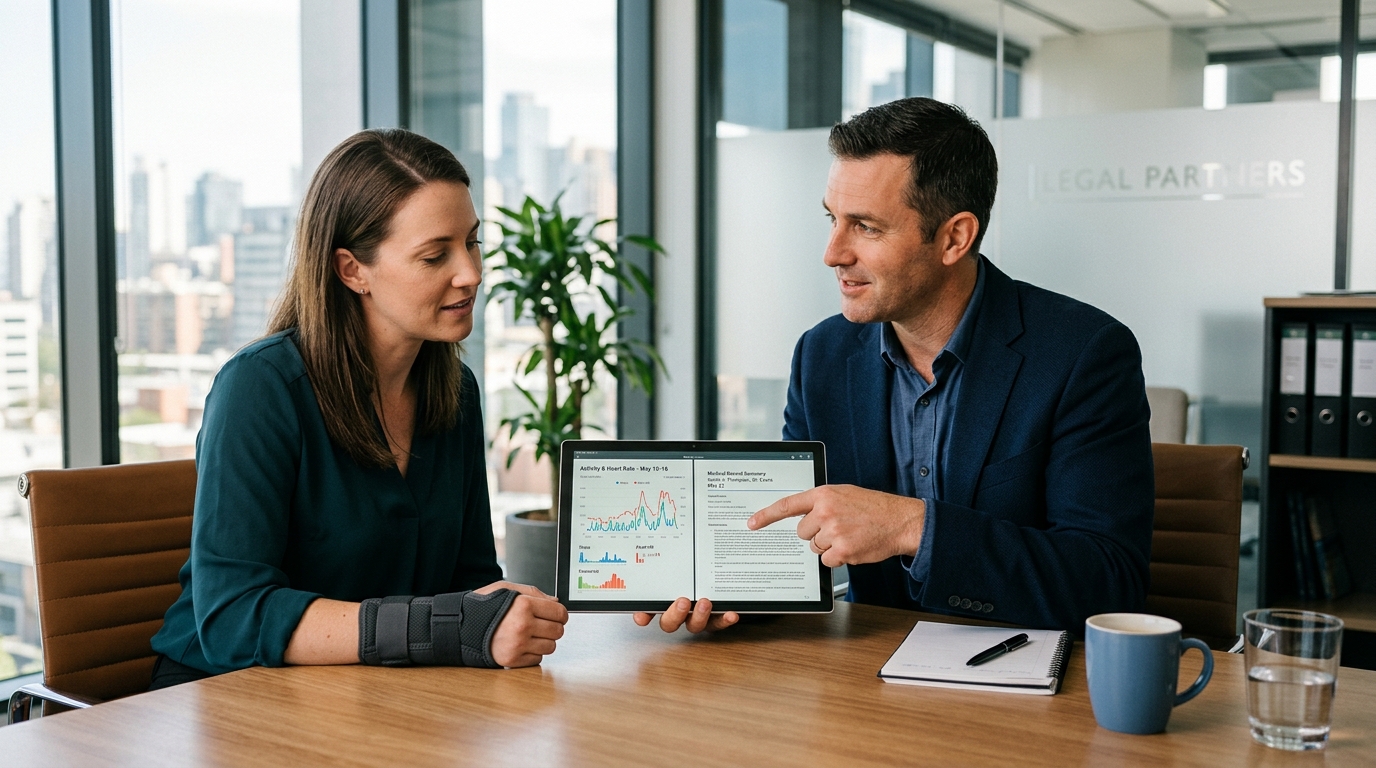
Personal injury damages may include medical bills, lost income, reduced earning capacity, pain, suffering, future care, and loss of normal life. Wearable data may support some of those damages by showing reduced activity, poor sleep, or slower recovery. It should not replace medical documentation.
If the injury came from a vehicle crash, readers can also review Car Accidents: Legal Procedures and Compensation. If the claim involves newer technology, AI Medical Malpractice Claims in 2026 shows how digital records can become important in modern injury cases.
Wearable device evidence can help personal injury claims when it shows a clear and honest pattern. It may support the injured person’s account, explain reduced activity, confirm recovery struggles, and challenge unfair insurance skepticism. But it can also create risk when the data lacks context or exposes unnecessary private information.
The smartest approach is balanced. Get medical care, follow treatment instructions, save device records, track symptoms, protect privacy, and avoid careless social media posts. Wearable data should work with the rest of the evidence, not stand alone.
This article is for general educational purposes only and is not legal advice. Anyone dealing with a serious injury, disputed insurance claim, broad data request, or low settlement offer should speak with a qualified attorney about evidence, deadlines, privacy, and legal options.